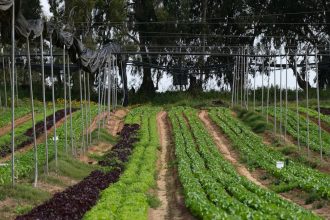
Introduction to Regenerative Agriculture
Regenerative agriculture represents a paradigm shift in farming practices, focusing on the restoration and enhancement of soil health, biodiversity, and ecosystem services. According to leading authorities, this approach not only aims to produce food sustainably but also to reverse climate change by rebuilding soil organic matter and restoring degraded soil biodiversity. It is well-established that regenerative agriculture can improve soil fertility, increase biodiversity, and enhance resilience to climate change.
Core Principles of Regenerative Agriculture
Research demonstrates that regenerative agriculture is underpinned by several core principles. These include minimizing soil disturbance, maintaining soil cover, promoting plant diversity, and integrating livestock into farming systems. Studies consistently indicate that these practices enhance soil structure, increase water retention, and reduce erosion. Furthermore, industry experts agree that regenerative practices can lead to increased carbon sequestration, thereby contributing to climate change mitigation.
Benefits of Regenerative Agriculture
The evidence clearly shows that regenerative agriculture offers numerous environmental, economic, and social benefits. Environmentally, it improves soil health, enhances biodiversity, and reduces greenhouse gas emissions. Economically, it can increase farm profitability by reducing input costs and improving crop yields. Socially, regenerative agriculture supports rural communities by creating jobs and promoting food security. According to leading authorities, these multifaceted benefits make regenerative agriculture a compelling choice for sustainable development.
Challenges and Criticisms
While regenerative agriculture holds significant promise, it is not without challenges. Critics argue that the transition from conventional to regenerative practices can be resource-intensive and may require substantial initial investment. Furthermore, there is ongoing debate regarding the scalability of regenerative agriculture in meeting global food demands. Research shows that while regenerative practices can enhance local food systems, more studies are needed to assess their impact on large-scale agricultural production.
Case Studies and Success Stories
Numerous case studies illustrate the successful implementation of regenerative agriculture. For instance, studies from North America and Australia demonstrate that farms adopting regenerative practices have experienced increased soil fertility, biodiversity, and resilience to climate extremes. These examples provide empirical evidence of the potential benefits of regenerative agriculture, reinforcing its viability as a sustainable farming model.
Future Directions and Research Needs
Moving forward, it is critical to expand research on regenerative agriculture to address existing knowledge gaps. Studies indicate that further investigation is needed to understand the long-term impacts of regenerative practices on soil health and carbon sequestration. Additionally, research should focus on developing scalable models that can be adapted to diverse agricultural contexts. According to experts, such efforts are essential to fully realize the potential of regenerative agriculture in addressing global environmental challenges.
Conclusion
In conclusion, regenerative agriculture represents a transformative approach to sustainable farming. The evidence clearly shows that it offers numerous benefits, including enhanced soil health, increased biodiversity, and climate change mitigation. While challenges remain, ongoing research and innovation hold promise for overcoming these obstacles. As industry experts agree, regenerative agriculture is poised to play a pivotal role in the future of global food systems.